


But there is a story that, for centuries, has remained on the margins of these magnificent halls: that of the women who painted, created, and dared. This tour was created to tell their voices, intertwining them with those of the great male masters, because art has never been a single narrative, but a complex, often silent dialogue, now finally audible.
This journey is designed for today's women: curious, aware, eager to recognize themselves in those who, before them, challenged rules, stereotypes, and imposed limits. It is an invitation to look at paintings not only with our eyes, but with experience, with empathy, with the collective female memory.
Between the 16th and 18th centuries, being a woman and an artist meant living on the edge between vocation and prohibition. Workshops were male-dominated spaces, the study of anatomy—especially the nude—was forbidden, and access to academies was almost always barred. Women could paint only if they were the daughters, sisters, or wives of artists, and their careers were often dependent on family reputation or the benevolence of a patron.
Yet, despite everything, some of them emerged with extraordinary strength. They painted portraits, altarpieces, historical scenes, still lifes, and mythological subjects. They did so with a different gaze, more intimate, more psychological, more aware of the female body and identity. They were not decorative exceptions: they were professionals, often famous in their lifetime, then erased or downplayed by subsequent historiography.
This tour is an act of restitution.
The Power of Beauty: Botticelli and the Feminine Imagination
Our journey naturally includes two absolute icons: Sandro Botticelli's The Birth of Venus and Primavera. Here, woman is goddess, symbol, ideal. Venus emerges from the waters like an archetype of eternal, ethereal, silent beauty. She is a body observed, desired, contemplated.
Some of the painters included in our itinerary:
Sofonisba Anguissola: the intelligence of the gaze
Sofonisba was one of the first painters to achieve international fame in the 16th century. She transformed limitations into opportunities. Unable to study the nude, she specialized in psychological portraiture. , her works silently dialogue with those of the great masters, demonstrating that depth has no gender.
Fede Galizia: the silent strength of still life
In an era when women were often reserved for the "minor genre," Fede Galizia demonstrates that there are no minor genres, but great gazes. Her works speak of attention, patience, a femininity that observes and constructs, not that submits.
Lavinia Fontana: the professional
Lavinia Fontana is a silent revolution. A Bolognese painter and mother of several children, Lavinia manages to maintain an independent career. In her female portraits, women are cultured, elegant, and present. They are not accessories, but protagonists. Lavinia paints women who have a place in the world, and assert it with their gaze.
Giulia Lama: Shadow and Matter
Giulia Lama is a fascinating and irregular figure. Venetian, cultured, unconventional. Her female figures don't seek to please: they exist, they weigh, they occupy space.
In a context dominated by grace and seduction, Giulia Lama chooses the truth of the flesh, the toil of the body, the shadow as a language. She is a painter who speaks to today's women with surprising modernity.
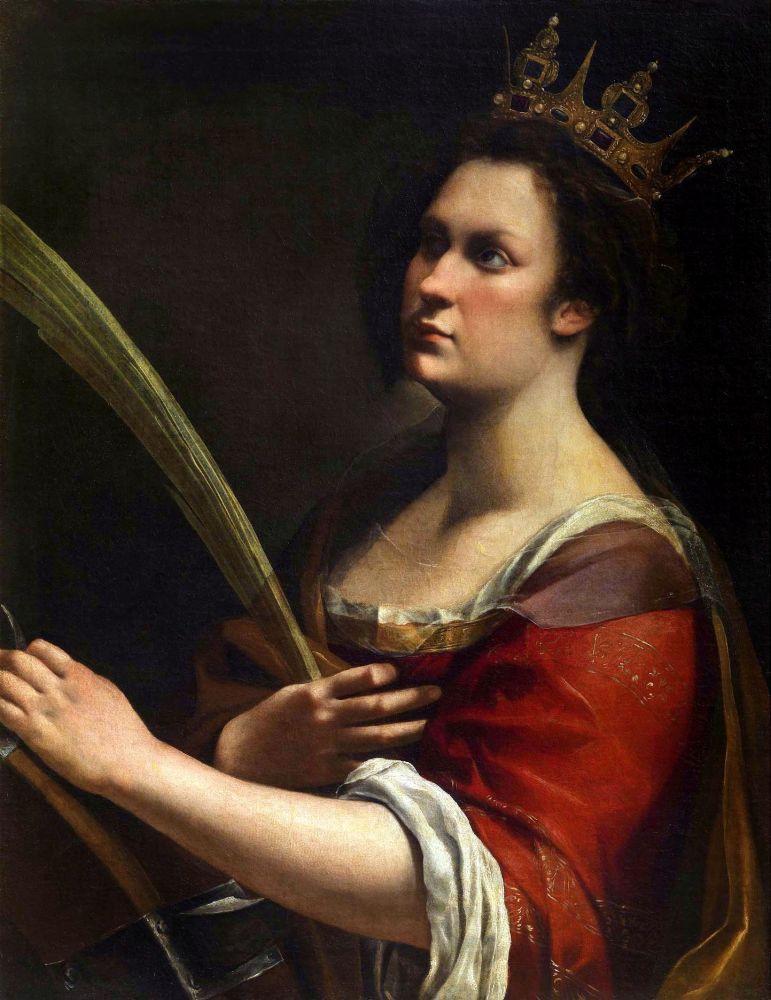
Artemisia Gentileschi: Painting as a Claim
Artemisia is not just a painter: she is a symbol. Her life, marked by violence and public trial, is reflected in an intense, dramatic, and powerful painting style. Her Judiths are not decorative heroines: they are women who act, decide, and strike.
At the Uffizi, Artemisia engages in a dialogue with Caravaggio, absorbing his chiaroscuro and emotional tension, yet surpassing him in empathy and feminine awareness.
Élisabeth Vigée Le Brun: Female Success
With Vigée Le Brun, we enter the eighteenth century, a world of courts, salons, and political power. Official portraitist to Marie Antoinette, Élisabeth is elegant, cultured, and self-assured. Her female portraits are luminous, lively, and affectionate.
And then comes Rosalba Carriera, with her powdered Venetian and foreign ladies, who brings us to experience the lightness of Italian Rococo.
Botticelli, Michelangelo, Raphael, Leonardo, Caravaggio. Their masterpieces are timeless, and we will explore them with awareness and the joy of filling our eyes with pure beauty. Alongside the painters, these masters help us understand the context, the rules, the possibilities, and the exclusions.
his tour isn't just a guided tour. It's an emotional, cultural, and identity-building experience. It's an invitation to recognize the roots of a female creativity that has never ceased to exist, even when it was ignored. It's a realization!
Leaving the Uffizi, we will never look at paintings the same way again. We will have met women who, brush in hand, said to the world: "I am here."
Available days: From Tuesday to Sunday
Bookable Starting Time: From 8:30 am to 3:30pm
Duration: 3 hours
Available Languages:
English, Italian, French, Spanish, German
Adult rate: The rate of the tour depends on the number of persons CALCULATE YOUR OWN RATE!
Child rate: Children 6 to 17 years old and with an ID card. Enter the number of people
Meeting Point: Neptune Fountain, Signoria Square, Florence